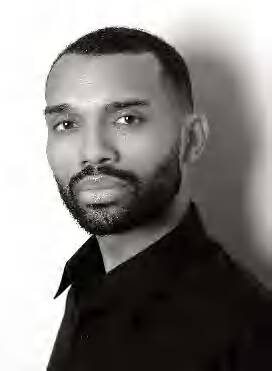
The following are excerpts from the book, Brother West: Loving and Living Out Loud, a Memoir, by Dr. Cornel West, Princeton University professor, notable public intellectual, "aspiring bluesman in a world of ideas, and jazzman in the life of the mind."
"... a featherless, two-legged, linguistically conscious creature born between urine and feces." (pg. 4)
"... hope learned and earned in the harsh realities of daily struggle; hope that remains on intimate terms with death; hope that is life-renewing and opposed to the cheap optimism of market-driven America, where Disneyland is sold as heaven on earth" ... "overcom[ing] the social death of slavery, the civic death of Jim Crow and Jane Crow, the psychic death of self-hatred, and the spiritual death of despair." (pg. 6)
"... [Keats] wrote about 'negative capability,' which he explained as the quality 'when a man is capable of being in uncertainties, mysteries, doubts, without any irritable reaching after fact and reason." (pg. 39)
"When I read the poetry of Walt Whitman, I could understand why he answered the question, 'Do I contradict myself?' with 'Very well then, I contradict myself. I am large, I contain multitudes." (pg. 40)
"I was a witness to how intelligent protest can cause real change." (pg. 51)
"... the catastrophic human condition - which is to say, the certain death of the flesh ..." (pg. 85)
"'Try again. Fail again. Fail better' - that's how Beckett saw it." (pg. 86)
"The central question ... the problem of evil ... doesn't go away ... But the fact that there is no reasoned-out answer doesn't turn you cynical. You live with the reality that the question remains, a challenge to your mind and your heart. You can't bring back the bodies that died in the Atlantic Ocean during the slave trade. You can't reconcile a tidal wave wiping out an entire city with the notion of a sovereign God. You can't equate catastrophe with the human condition - but you can, following the teachings of this particular Palestinian Jew, do what you can to help the least among us." (pg. 101)
[Concerning Haitian Emperor Haile Selassie's being deposed in 1974] "Some estimate that over 20 percent of all young people were killed. If your offspring was murdered, and you wished to reclaim his body, you were forced to stand in line and pay for the bullets that killed him." (pg. 143)
"... the widespread accommodation of American religion to the political and cultural status quo ... encourages an existential emptiness and political irrelevance ... worships the gods created by American society and kneels before the altars created by American culture." (pg. 147)
"... what would be Maestro Herbert von Karajan's last performance ... he ... invited me to stand in the wings to watch him conduct Bruckner's Seventh Symphony. By the time he put down the baton, he was so depleted that he couldn't walk. I carried him off the stage." (pg. 157)
"... looking at ourselves through the eyes of others who devalue us." (pg. 172)
"... either/or, absolutist, and supremacist mindsets lead to spiritual dead-ends." (pg. 173)
"... I learned that a man wearing a mask had broken into the kitchen and put a gun with a silencer to [former wife Elleni's] head. He wanted to know where I was." (pg. 177)
"We live in a creative tension with catastrophe." (pg. 179)
"God does not wink at America and close divine eyes to other nations." (pg. 186)
[Regarding failure to be above the fray] "... sometimes we fall into the muddy waters that we're trying to avoid." (pg. 188)
"To be an Afro-American ... is to be in the situation, intolerably exaggerated, of all those who have ever found themselves part of a civilization which they could in no wise honorably defend ... yet ... hoping to make the kingdom new, to make it honorable and worthy of life." (pg. 209)
"... I had heard of a sarcastic memo at the World Bank, where [its former chief economist-turned-Harvard President Lawrence] Summers reportedly suggested shipping polluted materials to sub-Saharan Africa. The reasoning was that the region already suffered from overpopulation, and was under-polluted." (pg. 217)
"Deep and mature spirituality is rooted in a wrestling with catastrophe." (pg. 225)
[Regarding disappointment with others] "I have come to realize that everybody's who they are, and not somebody else." (pg. 239)
"... we must not confuse the empty media category of 'post-racial' with the reality of America becoming less racist. The former is an empty illusion, the latter is a grand achievement." (pg.240)
[Political centrism] moves toward the center for likeability, when often the truth lies not in the middle, but beneath the mediocrity of the superficial exchange." (pg. 241)
Showing posts with label Books. Show all posts
Showing posts with label Books. Show all posts
Tuesday, June 8, 2010


Ignore Everybody: and 39 Other Keys to Creativity
The following are excerpts from this book by former advertising copywriter, cartoonist, and pundit Hugh MacLeod.
"Ignore everybody … The more original your idea is, the less good advice other people will be able to give you … trusting your feelings is not as easy as the optimists say it is ... what [feelings] tell us and what the rest of the world tells us are often two different things." (pg. 1)
“… trying desperately to pry my career out of the jaws of mediocrity … It was so liberating … to have something that didn’t require somebody else’s money, or somebody else’s approval, for a change.” (pg. 6)
“… if somebody wants to rip my idea off, go ahead … unlike me, you won’t be doing it for the joy of it. You’ll be doing it for some self-loathing, ill-informed, lame-ass mercenary reason.” (pg. 10)
“What a happy coincidence. God hates the same people I do.” (pg. 13)
“… the problem of selling a new idea to the general public can sometimes be a piece of cake, compared to selling a new idea internally to your team. This is to be expected: having your boss or biggest client not like your idea and fire you, hits one at a much more immediate and primal level, than having some abstract housewife in rural Kansas hypothetically not like your idea, after randomly seeing it advertised somewhere.” (pg. 15)
“Good ideas don’t exist in a vacuum. Good ideas exist in a social context. And not everybody has the same agenda as you.” (pg. 16)
[On the creative impulse] “Your wee voice doesn’t want you to sell something. Your wee voice wants you to make something. There’s a big difference. Your wee voice doesn’t give a damn about publishers, venture capitalists, or Hollywood producers.” (pg. 27)
“Keep your day job.” (pg. 30)
[On creativity by committee] “‘I don’t know. What do you think?’ ‘I don’t know. What do you think?’ ‘I don’t know. What do you think?’ ‘I don’t know. What do you think?’ ‘I don’t know. What do you think?’ ‘I don’t know. What do you think?’” (pg. 36)
“You are the most important person in my life. Please stop laughing at me.” (pg. 38)
“There’s no correlation between creativity and equipment ownership … A fancy tool just gives the second-rater one more pillar to hide behind.” (pg. 44)
“Don’t try to stand out from the crowd; avoid crowds altogether … There’s no point trying to do the same thing as 250,000 other young hopefuls, waiting for a miracle. All existing business models are wrong. Find a new one.” (pg. 48)
“Is your plan unique? Is there nobody else doing it? Then I’d be excited. A little scared, maybe, but excited.” (pg. 50)
[On assuming that one’s creative efforts will not pay off] The obvious advantage to this angle is … if anything good comes of it, then it’s an added bonus. The second … is that by scuppering all hope of worldly and social betterment from the creative act, you are finally left with only one question to answer: Do you make this damn thing exist or not? And once you can answer that truthfully for yourself, the rest is easy.” (pg. 53)
“The most important thing a creative person can learn professionally, is where to draw the red line that separates what you are willing to do, from what you are not. Art suffers the moment other people start paying for it. The more you need the money, the more people will tell you what do. The less control you will have. The more bullshit you will have to swallow. The less joy it will bring. Know this and plan accordingly.” (pg. 64)
“The market for something to believe in is infinite.” (pg. 75)
“The choice of media is irrelevant.” (pg. 85)
“It’s hard to sell out if nobody has bought in.” (pg. 91)
“He had original ideas once. But then he got famous.” (pg. 91)
“Nobody cares. Do it for yourself. Everybody is too busy with their own lives to give a damn about your book, painting, screenplay, etc., especially if you haven’t finished it yet.” (pg. 93)
“Welcome to nobody cares. Population: 6 billion.” (pg. 94)
“Worrying about ‘Commercial vs. Artistic’ is a complete waste of time.” (pg. 96)
“Inspiration precedes the desire to create, not the other way around.” (pg. 99)
“You have to find a way of working that makes it dead-easy to take full advantage of your inspired moments. They never hit at a convenient time, nor do they last long ... Writer’s block is just a symptom of feeling like you have nothing to say, combined with the rather weird idea that you should feel the need to say something.” (pg. 100)
“Part of being a master is learning how to sing in nobody else’s voice but your own.” (pg. 103)
[On connecting with an audience/market] “You can’t love a crowd the same way you can love a person.” (pg. 107)
“… there’s really only one way to truly connect. One way that actually works: Write from the heart. There is no silver bullet.” (pg. 108)
“The best way to get approval is not to need it.” (pg. 110)
“Stay ahead of the culture by creating the culture.” (pg. 115)
“Anyone can be an idealist. Anyone can be a cynic. The hard part lies somewhere in the middle – that is, being human.” (pg. 117)
“It’s not what the software does. It’s what the user does.” (pg. 118)
[On frugality] “Part of being creative is learning how to protect your freedom. That includes freedom from avarice.” (pg. 124)
“… which do I think is a better career choice: ‘Creativity’ or ‘Money’? I say both are the wrong answer. The best thing to be in this world is an effective human being. Sometimes that requires money, sometimes it doesn’t. Be ready for either when it happens.” (pp. 129-130)
“Beware of turning hobbies into jobs … ‘A man needs both …’” (pp. 132-133)
“Savor obscurity while it lasts. Once you ‘make it,’ your work is never the same ... It’s hard to invent a new language when a lot of people are already heavily invested in your work (including yourself).” (pp. 136-137)
“If you are successful, it’ll never come from the direction you predicted. Same is true if you fail.” (pg. 149)
"Ignore everybody … The more original your idea is, the less good advice other people will be able to give you … trusting your feelings is not as easy as the optimists say it is ... what [feelings] tell us and what the rest of the world tells us are often two different things." (pg. 1)
“… trying desperately to pry my career out of the jaws of mediocrity … It was so liberating … to have something that didn’t require somebody else’s money, or somebody else’s approval, for a change.” (pg. 6)
“… if somebody wants to rip my idea off, go ahead … unlike me, you won’t be doing it for the joy of it. You’ll be doing it for some self-loathing, ill-informed, lame-ass mercenary reason.” (pg. 10)
“What a happy coincidence. God hates the same people I do.” (pg. 13)
“… the problem of selling a new idea to the general public can sometimes be a piece of cake, compared to selling a new idea internally to your team. This is to be expected: having your boss or biggest client not like your idea and fire you, hits one at a much more immediate and primal level, than having some abstract housewife in rural Kansas hypothetically not like your idea, after randomly seeing it advertised somewhere.” (pg. 15)
“Good ideas don’t exist in a vacuum. Good ideas exist in a social context. And not everybody has the same agenda as you.” (pg. 16)
[On the creative impulse] “Your wee voice doesn’t want you to sell something. Your wee voice wants you to make something. There’s a big difference. Your wee voice doesn’t give a damn about publishers, venture capitalists, or Hollywood producers.” (pg. 27)
“Keep your day job.” (pg. 30)
[On creativity by committee] “‘I don’t know. What do you think?’ ‘I don’t know. What do you think?’ ‘I don’t know. What do you think?’ ‘I don’t know. What do you think?’ ‘I don’t know. What do you think?’ ‘I don’t know. What do you think?’” (pg. 36)
“You are the most important person in my life. Please stop laughing at me.” (pg. 38)
“There’s no correlation between creativity and equipment ownership … A fancy tool just gives the second-rater one more pillar to hide behind.” (pg. 44)
“Don’t try to stand out from the crowd; avoid crowds altogether … There’s no point trying to do the same thing as 250,000 other young hopefuls, waiting for a miracle. All existing business models are wrong. Find a new one.” (pg. 48)
“Is your plan unique? Is there nobody else doing it? Then I’d be excited. A little scared, maybe, but excited.” (pg. 50)
[On assuming that one’s creative efforts will not pay off] The obvious advantage to this angle is … if anything good comes of it, then it’s an added bonus. The second … is that by scuppering all hope of worldly and social betterment from the creative act, you are finally left with only one question to answer: Do you make this damn thing exist or not? And once you can answer that truthfully for yourself, the rest is easy.” (pg. 53)
“The most important thing a creative person can learn professionally, is where to draw the red line that separates what you are willing to do, from what you are not. Art suffers the moment other people start paying for it. The more you need the money, the more people will tell you what do. The less control you will have. The more bullshit you will have to swallow. The less joy it will bring. Know this and plan accordingly.” (pg. 64)
“The market for something to believe in is infinite.” (pg. 75)
“The choice of media is irrelevant.” (pg. 85)
“It’s hard to sell out if nobody has bought in.” (pg. 91)
“He had original ideas once. But then he got famous.” (pg. 91)
“Nobody cares. Do it for yourself. Everybody is too busy with their own lives to give a damn about your book, painting, screenplay, etc., especially if you haven’t finished it yet.” (pg. 93)
“Welcome to nobody cares. Population: 6 billion.” (pg. 94)
“Worrying about ‘Commercial vs. Artistic’ is a complete waste of time.” (pg. 96)
“Inspiration precedes the desire to create, not the other way around.” (pg. 99)
“You have to find a way of working that makes it dead-easy to take full advantage of your inspired moments. They never hit at a convenient time, nor do they last long ... Writer’s block is just a symptom of feeling like you have nothing to say, combined with the rather weird idea that you should feel the need to say something.” (pg. 100)
“Part of being a master is learning how to sing in nobody else’s voice but your own.” (pg. 103)
[On connecting with an audience/market] “You can’t love a crowd the same way you can love a person.” (pg. 107)
“… there’s really only one way to truly connect. One way that actually works: Write from the heart. There is no silver bullet.” (pg. 108)
“The best way to get approval is not to need it.” (pg. 110)
“Stay ahead of the culture by creating the culture.” (pg. 115)
“Anyone can be an idealist. Anyone can be a cynic. The hard part lies somewhere in the middle – that is, being human.” (pg. 117)
“It’s not what the software does. It’s what the user does.” (pg. 118)
[On frugality] “Part of being creative is learning how to protect your freedom. That includes freedom from avarice.” (pg. 124)
“… which do I think is a better career choice: ‘Creativity’ or ‘Money’? I say both are the wrong answer. The best thing to be in this world is an effective human being. Sometimes that requires money, sometimes it doesn’t. Be ready for either when it happens.” (pp. 129-130)
“Beware of turning hobbies into jobs … ‘A man needs both …’” (pp. 132-133)
“Savor obscurity while it lasts. Once you ‘make it,’ your work is never the same ... It’s hard to invent a new language when a lot of people are already heavily invested in your work (including yourself).” (pp. 136-137)
“If you are successful, it’ll never come from the direction you predicted. Same is true if you fail.” (pg. 149)
The Predictioneer's Game
The following are excerpts from this book by Dr. Bruce Bueno de Mesquita, a political scientist, senior fellow at the Stanford University Hoover Institution, and game theorist.
"... Cambodia's Pol Pot ... ordered the murder of millions of Cambodians for such crimes as wearing eyeglasses (proof that they were educated and therefore probably a threat to the regime)." (pg. xii)
"The difference between doing a good job and doing a lousy job is driven by how many people a leader has to keep happy." (pg. xiii)
"All that is needed is a tool ... that ... evaluates [information] by assuming that everyone does what they think is best for them ... progress being made in demystifying the world of human thought and decision." (pg. xix)
"Prediction with game theory ... means empathizing with how others think about the same problems." (pg. xx)
"... what game theorists call a 'costly signal'." (pg. 4)
"To be a successful prognosticator, it is critical to think about ... what [others] think, what they think you think, what you think they think. what you think they think you think ... the existence of something called the national interest - may be just a strategic fiction created by politicians for their own advantage instead of ours ... how to use logic to cut through the fog of language." (pg. 11)
"Lies are a part of strategizing ... When promises and interests differ, people ... do whatever they think will benefit them most." (pg. 12)
"Trust but verify." (pg. 13)
"Rational people know when to stop searching [for information] - when enough is enough ... people with crazy ideas can be perfectly rational." (pg. 16)
"Sometimes we have to make decisions even though we are in the dark about the consequences." (pg. 17)
"... manage the range of consequences ..." "... people act on expectations ..." "Tipping is illegal in China." (pg. 18)
"... our leaders really are free to pursue their own interests and to call that the national interest or the corporate interest." (pg. 24)
"The key to any of these games is sorting out the difference between knowledge and beliefs." (pg. 25)
"... whether what they believe is consistent with their new knowledge ... to predict the future we have to reflect on when people are likely to lie and when they are most likely to tell the truth." (pg. 27)
"... engineering the future by exploiting leverage that really does not exist ... Raising the stakes helps flush out the bluffers ... Getting the best results [in bluff detection] comes down to matching actions to beliefs." (pg. 28)
"... what game theorists call a hand wave--that is, at some point the analyst waves his hands in the air instead of providing the logical connection from argument to conclusions." (pg. 29)
"... correlation is not causation ... decisions can be altered by the expectation of their consequences ... a superbly descriptive label for a problem in enforcing contracts. [Economists] ask, is the contract 'negotiation-proof'?" (pg. 31)
"Justice gave way, as it so often does in our judicial system, to the relative ability of plaintiffs and defendants to endure pain." (pg. 32)
"Agenda control--determining the order of decision making--can be everything." (pg. 42)
"... numbers are clear; words are vague." (pg. 52)
"... the CIA has checked out the risk that different experts give greatly different answers leading to greatly different predictions." (pg. 54)
"a lot of classified information is easily reproduced from open, public sources for those who are willing to work at it ... Everyone shares these two goals: get their preferred outcome, and get credit for any outcome." (pg. 55)
"... we can define a player's power--the pressure they really exert to shape the outcome--as equal to their influence multiplied by their salience [i.e. how salient the issue is for them]." (pg. 57)
"Framing the problem is usually the hardest part of the prediction and engineering process." (pg. 67)
"... an 'issue' is any specific question for which different individuals, organized groups, or informal interested parties have different preferences regarding the outcome, and for which it is true that an overall agreement cannot be reached unless at least a key set of players come to agreement on the question." (pg. 70)
"... to signal the other side that they are up against deep pockets that can endure high costs to fight the good fight. The message: 'We will keep you embattled in motions, countermotions, and delays until we break the bank. We can spend more than you.' ... playing the game called the war of attrition." (pg. 88)
"Imagine trying to win at chess when the rules for winning change with each opponent, as they do in the negotiating game!" (pg. 94)
"It takes a courageous person to defy one's own beliefs ..." (pg. 97)
"Sometimes it is worse to win in court than to accept a plea agreement, even when you are innocent." (pg. 100)
"The belief that good deeds, whatever their motivation, will elicit a good response, reflects optimism about human nature that sometimes is met by reality, but all too often is met instead with greed and aggression." (pg. 104-105)
"Management can be a profile in courage by cutting off revenues today to prevent bigger headaches tomorrow, but most profiles in courage, as it turns out, lose their jobs." (pg. 123)
"Models fail for three main reasons: the logic fails to capture what actually goes on in people's heads when they make choices; the information going into the model is wrong - garbage in, garbage out; or something outside the frame of reference of the model occurs to alter the situation, throwing it off course." (pg. 124)
"... an unusual stakeholder ... was content to fail while sticking to her principles." (pg. 127)
"There are two ways to maneuver into a winning position. One is to persuade others to adopt your point of view. The other is to adopt theirs." (pg. 128)
"... how can you predict the unpredictable? Well, although it is impossible to anticipate unpredictable developments, it is possible to predict how big an 'earthquake' is needed to disrupt a prediction." (pg. 130)
"Real people may not be able to do the cumbersome math that goes into a model, but that doesn't mean they aren't making much more complicated calculations in their heads even if they don't know how to represent their analytic thought processes mathematically." (pg. 135)
"... self-interest will beat out the collective good just about every time." (pg. 146)
"Getting some benefit sooner is always worth more than getting it later." (pg. 159)
"The beauty of a model is the freedom it gives us to ask lots of what-if questions." (pg. 161)
"... When a campaigner promises peace and prosperity, motherhood and apple pie, we don't really learn anything about what they plan to do." (pg. 166)
"... any predictioneer worth his or her salt must be willing to risk the embarrassment that comes from being wrong." (pg. 171)
"Just as modern-day central banks increase interest rates to slow growth, so the twelfth-century [Catholic] Church raised interest rates by denying heaven to those who lent money for profit." (pg. 210)
"The path to forgiveness ... generally included making financial restitution to the Church rather than to those from whom a profit had been made." (pg. 211)
"Two common ordeals, both supervised by the Church, involved submersion of the accused in deep water or forcing the accused to hold a red-hot piece of iron for a prescribed amount of time. Failure to stay submerged ... was taken as proof of guilt, as was the inability to hold the red-hot iron." (pg. 213)
"... exercises in what game theorists call cheap talk. Promises are easily made but not easily enforced." (pg. 222)
"To get everyone to agree to something potentially costly, the something they actually agree to must be neither very demanding nor very costly. If it is, many will refuse to join because for them the costs are greater than the benefits, or else they will join while free-riding on the costs paid by a few who were willing to bear them." (pg. 223)
"Cheating is an equilibrium strategy for many polluters, a strategy backed by the good faith and credit of their governments." (pg. 224)
"... Cambodia's Pol Pot ... ordered the murder of millions of Cambodians for such crimes as wearing eyeglasses (proof that they were educated and therefore probably a threat to the regime)." (pg. xii)
"The difference between doing a good job and doing a lousy job is driven by how many people a leader has to keep happy." (pg. xiii)
"All that is needed is a tool ... that ... evaluates [information] by assuming that everyone does what they think is best for them ... progress being made in demystifying the world of human thought and decision." (pg. xix)
"Prediction with game theory ... means empathizing with how others think about the same problems." (pg. xx)
"... what game theorists call a 'costly signal'." (pg. 4)
"To be a successful prognosticator, it is critical to think about ... what [others] think, what they think you think, what you think they think. what you think they think you think ... the existence of something called the national interest - may be just a strategic fiction created by politicians for their own advantage instead of ours ... how to use logic to cut through the fog of language." (pg. 11)
"Lies are a part of strategizing ... When promises and interests differ, people ... do whatever they think will benefit them most." (pg. 12)
"Trust but verify." (pg. 13)
"Rational people know when to stop searching [for information] - when enough is enough ... people with crazy ideas can be perfectly rational." (pg. 16)
"Sometimes we have to make decisions even though we are in the dark about the consequences." (pg. 17)
"... manage the range of consequences ..." "... people act on expectations ..." "Tipping is illegal in China." (pg. 18)
"... our leaders really are free to pursue their own interests and to call that the national interest or the corporate interest." (pg. 24)
"The key to any of these games is sorting out the difference between knowledge and beliefs." (pg. 25)
"... whether what they believe is consistent with their new knowledge ... to predict the future we have to reflect on when people are likely to lie and when they are most likely to tell the truth." (pg. 27)
"... engineering the future by exploiting leverage that really does not exist ... Raising the stakes helps flush out the bluffers ... Getting the best results [in bluff detection] comes down to matching actions to beliefs." (pg. 28)
"... what game theorists call a hand wave--that is, at some point the analyst waves his hands in the air instead of providing the logical connection from argument to conclusions." (pg. 29)
"... correlation is not causation ... decisions can be altered by the expectation of their consequences ... a superbly descriptive label for a problem in enforcing contracts. [Economists] ask, is the contract 'negotiation-proof'?" (pg. 31)
"Justice gave way, as it so often does in our judicial system, to the relative ability of plaintiffs and defendants to endure pain." (pg. 32)
"Agenda control--determining the order of decision making--can be everything." (pg. 42)
"... numbers are clear; words are vague." (pg. 52)
"... the CIA has checked out the risk that different experts give greatly different answers leading to greatly different predictions." (pg. 54)
"a lot of classified information is easily reproduced from open, public sources for those who are willing to work at it ... Everyone shares these two goals: get their preferred outcome, and get credit for any outcome." (pg. 55)
"... we can define a player's power--the pressure they really exert to shape the outcome--as equal to their influence multiplied by their salience [i.e. how salient the issue is for them]." (pg. 57)
"Framing the problem is usually the hardest part of the prediction and engineering process." (pg. 67)
"... an 'issue' is any specific question for which different individuals, organized groups, or informal interested parties have different preferences regarding the outcome, and for which it is true that an overall agreement cannot be reached unless at least a key set of players come to agreement on the question." (pg. 70)
"... to signal the other side that they are up against deep pockets that can endure high costs to fight the good fight. The message: 'We will keep you embattled in motions, countermotions, and delays until we break the bank. We can spend more than you.' ... playing the game called the war of attrition." (pg. 88)
"Imagine trying to win at chess when the rules for winning change with each opponent, as they do in the negotiating game!" (pg. 94)
"It takes a courageous person to defy one's own beliefs ..." (pg. 97)
"Sometimes it is worse to win in court than to accept a plea agreement, even when you are innocent." (pg. 100)
"The belief that good deeds, whatever their motivation, will elicit a good response, reflects optimism about human nature that sometimes is met by reality, but all too often is met instead with greed and aggression." (pg. 104-105)
"Management can be a profile in courage by cutting off revenues today to prevent bigger headaches tomorrow, but most profiles in courage, as it turns out, lose their jobs." (pg. 123)
"Models fail for three main reasons: the logic fails to capture what actually goes on in people's heads when they make choices; the information going into the model is wrong - garbage in, garbage out; or something outside the frame of reference of the model occurs to alter the situation, throwing it off course." (pg. 124)
"... an unusual stakeholder ... was content to fail while sticking to her principles." (pg. 127)
"There are two ways to maneuver into a winning position. One is to persuade others to adopt your point of view. The other is to adopt theirs." (pg. 128)
"... how can you predict the unpredictable? Well, although it is impossible to anticipate unpredictable developments, it is possible to predict how big an 'earthquake' is needed to disrupt a prediction." (pg. 130)
"Real people may not be able to do the cumbersome math that goes into a model, but that doesn't mean they aren't making much more complicated calculations in their heads even if they don't know how to represent their analytic thought processes mathematically." (pg. 135)
"... self-interest will beat out the collective good just about every time." (pg. 146)
"Getting some benefit sooner is always worth more than getting it later." (pg. 159)
"The beauty of a model is the freedom it gives us to ask lots of what-if questions." (pg. 161)
"... When a campaigner promises peace and prosperity, motherhood and apple pie, we don't really learn anything about what they plan to do." (pg. 166)
"... any predictioneer worth his or her salt must be willing to risk the embarrassment that comes from being wrong." (pg. 171)
"Just as modern-day central banks increase interest rates to slow growth, so the twelfth-century [Catholic] Church raised interest rates by denying heaven to those who lent money for profit." (pg. 210)
"The path to forgiveness ... generally included making financial restitution to the Church rather than to those from whom a profit had been made." (pg. 211)
"Two common ordeals, both supervised by the Church, involved submersion of the accused in deep water or forcing the accused to hold a red-hot piece of iron for a prescribed amount of time. Failure to stay submerged ... was taken as proof of guilt, as was the inability to hold the red-hot iron." (pg. 213)
"... exercises in what game theorists call cheap talk. Promises are easily made but not easily enforced." (pg. 222)
"To get everyone to agree to something potentially costly, the something they actually agree to must be neither very demanding nor very costly. If it is, many will refuse to join because for them the costs are greater than the benefits, or else they will join while free-riding on the costs paid by a few who were willing to bear them." (pg. 223)
"Cheating is an equilibrium strategy for many polluters, a strategy backed by the good faith and credit of their governments." (pg. 224)
Subscribe to:
Posts (Atom)